What to Expect in Emergency
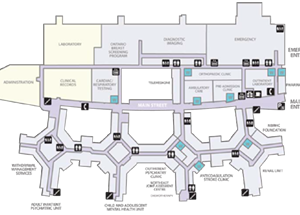
The Emergency Department is open 24 hrs/day 7 days per week. It is staffed by a multi-disciplinary team of triage nurses, (RNs/RPNs), clerical staff, registered respiratory therapists, social services, spiritual care, crisis intervention, orthopedic technicians, emergency trained physicians and other members of our health care team.
Frequently Asked Questions:
- What do the numbers mean on the Wait Time Tracker?
- How are patients prioritized?
- What can I expect while I wait for care in the Emergency Department?
- What do I do if my condition changes while waiting?
- What are my other options for non-urgent care?
- Why am I moved from room to room or back to the waiting room?
- What are we doing to address Emergency Department wait times and physician coverage?
- What can patients do to help?
- What should I bring with me to the Emergency Department?
- Do you have Nurse Practitioners in the Emergency Department?
1. What do the numbers mean on the Wait Time Tracker?
Wait times are updated every 15 minutes and are estimates from when non-urgent patients are registered to when they could be seen by a physician.
Estimated Wait Time is a prediction of how long a patient will wait based on the total number of patients waiting to see a physician.
Longest Wait Time is the longest wait time within the past 2 hours.
Total patients is how many patients are currently in the Emergency Department.
Patients waiting to be seen is the number of patients who have registered with a triage nurse and are waiting to be seen by an Emergency Department provider.
Patients being treated is the number of patients who are currently waiting for a diagnosis or being treated by an Emergency Department practitioner.
2. How are patients prioritized?
The Emergency Department does not see patients in the order they arrive. Patients are assessed based on the severity of their condition, the risk of serious harm, and how quickly they need medical care.
We recognize that when you are sick, injured, in pain or worried about your health, your need for care can feel very urgent. In the Emergency Department, prioritization is not based on whether your concern is important or whether you need care. It is based on the potential risk to your health if care is delayed. This means a patient with an urgent health concern may sometimes need to wait while we care for someone at greater immediate risk of death or serious harm.
At any given time, we may be caring for patients with very different levels of need:
- Immediate risk to life or serious harm: Some patients are critically ill or injured, rapidly deteriorating, or at risk of death or serious complications. Their care cannot safely wait and may require a physician and several members of the care team at once.
- Urgent health concerns: Other patients have conditions that require timely assessment and treatment, but are currently stable enough to wait while patients at greater immediate risk are cared for.
- Less urgent, but still requiring care: Some conditions still need medical assessment and treatment, but can safely wait longer based on the patient’s current condition and risk.
A long wait does not mean that your concern is not serious or that you do not need care. It means that, at that moment, other patients have a greater risk if their care is delayed.
When physician coverage and other resources are limited, this can result in very long waits for patients who still have legitimate and important health-care needs. These are not the waits we want for our community. However, our first responsibility must always be to ensure that patients at greatest risk of death or serious harm receive care without delay.
The needs of patients in the Emergency Department are continually changing. Conditions can also change while you wait. If your symptoms worsen or you develop new concerns, please tell a member of the Emergency Department team so that you can be reassessed.
3. What can I expect while I wait for care in the Emergency Department?
To help improve the timeliness of your care, triage nurses may begin certain tests, like blood work, X-rays or urine samples, while you wait to see an Emergency Department provider.
For your safety, please wait in the Emergency Department after this triage assessment. These tests are only one part of your care and do not replace being seen by a physician or nurse practitioner.
Leaving before being assessed by a provider may delay the diagnosis and treatment of a serious medical condition. You should not expect to be contacted with your test results.
If you are considering leaving before seeing a provider, please let a member of our team know. A nurse will discuss the potential risks of leaving before your assessment is complete and you will be asked to sign an Against Medical Advice (AMA) form acknowledging that these risks have been reviewed with you.
If a test result later indicates that emergency assessment is required, you will be responsible to arrange follow up. If you are advised to return to the Emergency Department, your previous place will not be held. You will be required to register, be triaged and wait to be reassessed again based on your condition and the urgency of your medical needs.
We recommend you remain in the Emergency Department until your assessment and care are complete. If you have concerns about your wait, your symptoms change, or you feel worse while waiting, please speak with a member of our Emergency Department team.
4. What do I do if my condition changes while waiting?
If you have concerns about your wait, your symptoms change, or you feel worse while waiting, please speak with a member of our Emergency Department team.
For your safety, please do not leave without being seen by an Emergency Department provider.
If you are considering leaving without seeing a provider, please speak with a member of the team first. Leaving before being assessed by a provider may delay the diagnosis and treatment of a serious medical condition.
5. What are my other options for non-urgent care?
Knowing your options can help you reduce stress and get timely support. You may be able to use another healthcare option to get the care you need more quickly if your condition is not urgent.
For non-urgent care, patients with a family doctor or nurse practitioner should contact them first.
Some pharmacists in Ontario can now assess for minor illnesses or conditions.
There is a crisis line (1-800-352-1141) for mental health concerns.
If your condition is not an emergency and you are able to travel safely, you may also wish to consider other emergency departments in the district. Patient volumes and wait times can vary by location and time of day.
For non-urgent needs consider the following options. https://nbrhc.on.ca/patients-visitors/care-providers/community-resources/.
For serious medical injuries and conditions, DO NOT delay seeking emergency care.
6. Why am I moved from room to room or back to the waiting room?
Being moved between rooms, treatment areas, or the waiting room is a normal part of how the Emergency Department manages patient care.
Where you are located can change depending on your condition, the type of care or testing you need, room availability, and how many other patients require care at that time.
You may be moved while waiting for test results, after seeing a health-care provider, or when a different area is better suited to your next stage of care. Returning to the waiting room does not necessarily mean that your care has stopped or that you are less important.
The Emergency Department continually reassesses patients and prioritizes care based on medical need. If your symptoms get worse or you have new concerns while waiting, please let a member of the Emergency Department team know right away.
7. What are we doing to address Emergency Department wait times and physician coverage?
We know current Emergency Department wait times are not what our patients, community or care teams want. There is no single solution, and we are actively working on several fronts to improve access to care and make the best use of the resources available.
- Strengthening physician coverage through active recruitment, locum physicians and other strategies to address current and longer-term coverage needs.
- Making the best use of our health-care team by supporting physicians, Nurse Practitioners, nurses and other team members to work to their full scope and focus their time where it can have the greatest impact.
- Improving how care is delivered by continually reviewing ED processes, patient flow and opportunities to reduce avoidable delays.
- Working beyond the ED with community and health-system partners to strengthen other care options and advocate for longer-term solutions to the pressures affecting emergency care.
We recognize that these efforts do not eliminate the pressures patients are experiencing today. We remain focused on improving care now, while continuing to pursue the longer-term solutions our community needs.
8. What can patients do to help?
Please show kindness and understanding to our health care staff during your Emergency Department visit.
You can also familiarize yourself with options for non-urgent health care needs to help preserve ED resources: https://nbrhc.on.ca/patients-visitors/care-providers/community-resources/.
9. What should I bring with me to the Emergency Department?
When coming to the Emergency Department, bring:
- your health card
- all medications or a list of medications
- a list of allergies
- emergency contact information
- chargers for electronics
- drinks and snacks if required during your wait (there are vending machines available in the hospital)
This ensures your healthcare providers can provide the safest and timeliest care.
10. Do you have Nurse Practitioners in the Emergency Department?
Yes. Nurse Practitioners (NPs) are an important part of our Emergency Department team. They are highly trained health-care providers who can independently assess, diagnose and treat patients, order and interpret diagnostic tests, prescribe medications, and develop treatment plans.
When available, NPs provide direct patient care and help increase our capacity to assess and treat patients in the Emergency Department.
NPs also support important patient safety and follow-up work, including reviewing results and addressing clinical issues that may arise during or after an Emergency Department visit. Because their role includes both direct patient care and these additional responsibilities, an NP may be working in the department even when they are not actively seeing patients.
Contact:
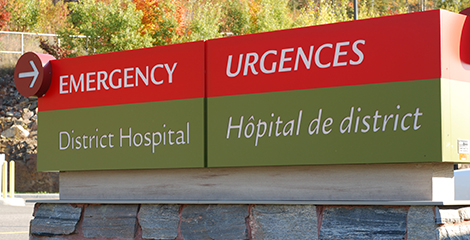
Emergency Department
50 College Drive
P.O. Box 2500
North Bay, Ontario
P1B 5A4
Tel: 705-474-8600 ext. 4500
Hours of Operation:
24 hours/day, 7 days/week
North Bay
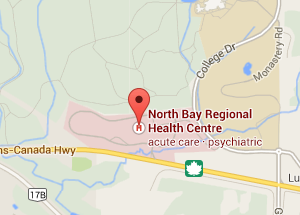
50 College Drive,
P.O. Box 2500
North Bay, ON
P1B 5A4
Tel: 705-474-8600
Sudbury
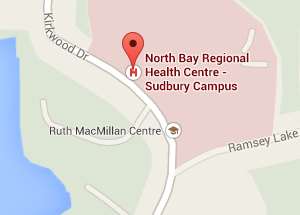
680 Kirkwood Drive,
Sudbury, ON
P3E 1X3
Tel: 705-675-9193
Fax: 705-675-6817